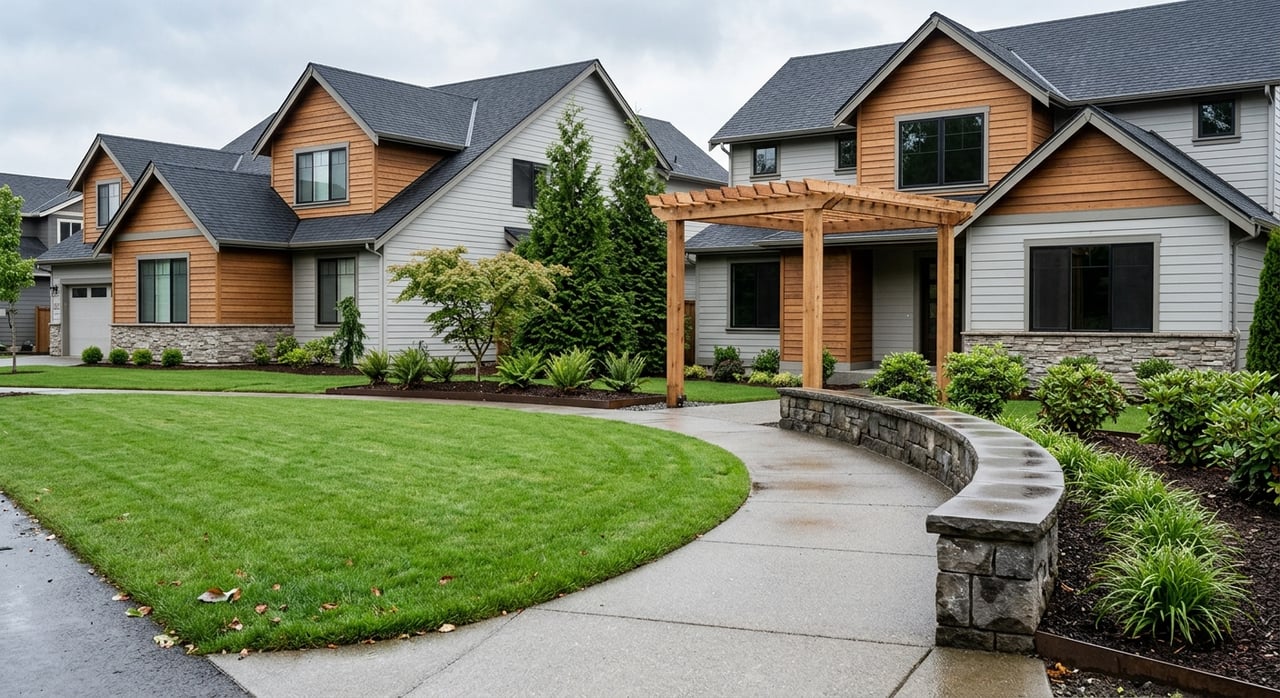
If you are home shopping in Mill Creek, an HOA can shape your day-to-day experience almost as much as the home itself. That matters here because Mill Creek has a strong planned-community identity, with parks, trails, Town Center amenities, and neighborhoods that often layer private rules on top of city standards. If you want to understand what HOA living can really mean before you buy or sell, this guide will walk you through the basics, the differences between communities, and the questions worth asking. Let’s dive in.
Mill Creek Has a Planned-Community Feel
Mill Creek was originally developed as a golf course community and today includes nearly 21,000 residents, 11 neighborhood and community parks, nature trails, and a Town Center with more than 80 shops, restaurants, and services. That broader setting helps explain why neighborhood appearance and shared spaces are such a visible part of daily life here.
For buyers and sellers, this means HOA living in Mill Creek does not exist in a vacuum. You are often comparing private community rules and amenities alongside city-maintained parks, trails, code enforcement standards, and access to Town Center services.
HOA Living Is Not One-Size-Fits-All
One of the biggest misconceptions about Mill Creek is that every home falls under the same association structure. In reality, Mill Creek includes a mix of properties in the Mill Creek Community Association, smaller neighborhood HOAs, and homes outside MCCA entirely.
That distinction matters. MCCA notes that not every Mill Creek home is part of its association, and it specifically identifies several nearby neighborhoods that do not pay MCCA dues or receive MCCA services. Examples include Parkside, The Parks, The Reserve, The Vineyards, Brighton, Heatherwood West, Highlands, and Northpointe.
MCCA as a Local HOA Model
MCCA is the city’s largest and most widely recognized association. It began in 1974 as part of a planned residential development in unincorporated Snohomish County and later became part of the City of Mill Creek in 1983.
Today, MCCA includes 48 divisions across single-family homes, townhomes, condos, and apartments. Owners become voting members, and ownership comes with governing documents such as bylaws and restrictive covenants.
Smaller HOAs Have Their Own Rules
Mill Creek also includes smaller associations with their own boards, approval processes, and expectations. The Parks is a 254-home community, while Parkside is a 79-home association near Heron Park. River Crossing is another example, with its own governing and architectural structure.
The practical takeaway is simple: two homes a few miles apart may come with very different dues, review standards, landscaping rules, and shared-maintenance responsibilities. That is why it is important to look past the neighborhood name and review the specific association tied to the property.
What HOAs Typically Regulate
In Mill Creek, HOA rules often focus on exterior appearance, common-area maintenance, and architectural consistency. In larger associations like MCCA, board members and committees review architectural aesthetics, enforce covenant standards, maintain common property, and provide security patrol service.
For many homeowners, the most noticeable part of HOA governance is project approval. Exterior changes are often not a do-it-yourself decision, even when the improvement seems minor.
Exterior Changes Usually Need Approval
MCCA says nearly every visible improvement or modification to a home or lot requires an Architectural Control Committee application. It also notes that many projects require a City of Mill Creek permit in addition to HOA approval.
That pattern appears in other Mill Creek communities too. The Parks requires ACC approval for exterior changes and asks for a city permit copy when one is needed. River Crossing requires ACC submission at least 21 days before work begins and uses neighbor notification for many projects.
If you are planning to repaint, replace fencing, update landscaping, remove trees, or make other visible changes, the approval process should be part of your planning from day one. For sellers, this also matters before listing, because unapproved work can become an issue during resale.
What HOA Dues Can Cover
HOA dues in Mill Creek vary because the scope of services varies. A community with extensive trails, parks, staffing, and patrol service will usually look very different from a smaller HOA focused mainly on appearance standards and limited common areas.
MCCA offers the clearest local example. Its 2026 annual assessment was $766 for single-family homes, with townhomes at 75% of that rate and condos or apartments at 50% of that rate.
MCCA Dues Cover a Broad Range
According to MCCA, dues fund common-area maintenance, pocket parks, trails, facilities, trail and informational signage, staff, vehicles, amenities, social activities, and related costs. For single-family entries, maintenance also includes water, power, and landscaping, while the city maintains roads in MCCA, though some sub-associations have their own private roads.
MCCA also states that invoices are mailed in late May and are due July 1. Late fees may begin August 1 at 5% of the unpaid balance per month.
Amenities Can Differ Greatly
MCCA says it owns and maintains about 160 acres of common area, including 21 park areas, 12 playgrounds, more than 16 miles of trails, and a 120-acre nature preserve. It also reports that security patrols run every day of the year.
That is a much broader amenity footprint than you may find in a smaller Mill Creek HOA. Communities like The Parks, River Crossing, and Parkside highlight a more limited, neighborhood-level experience, often centered on landscaping, architectural control, and selected shared spaces rather than a large master-association system.
HOA vs Non-HOA Living in Mill Creek
For some buyers, an HOA brings structure and predictable upkeep of shared spaces. For others, the tradeoff may feel too restrictive, especially if they want more freedom over exterior decisions or future improvements.
In Mill Creek, comparing HOA and non-HOA living means looking at both private rules and city standards. The City of Mill Creek says its code enforcement rules still address issues such as vegetation clearance, property upkeep, parking, and junk vehicles, especially in areas without active homeowner associations.
So even if a home is outside a private HOA, that does not mean there are no appearance or maintenance expectations. It usually means fewer private restrictions, but more direct individual responsibility for upkeep and compliance.
What Buyers Should Review Before Closing
Washington HOA rules are not identical from one community to the next. The state uses both RCW 64.38 and RCW 64.90, and some selected RCW 64.90 provisions apply to pre-July 1, 2018 communities and can override inconsistent older provisions.
For you as a buyer, the legal details matter less than the practical result: do not assume every Mill Creek HOA follows the same structure, disclosure process, or document set. Review the community’s records carefully before you commit.
Focus on Financial Health
Under Washington law, associations must keep detailed financial records and prepare annual financial statements. Reserve studies are supplemental to operating and maintenance budgets, which makes them an important tool for understanding long-term planning.
For communities subject to RCW 64.90, the resale certificate must disclose current and delinquent assessments, special assessments, and other governing-document restrictions. The statutory notice also warns that unpaid assessments and related charges can become a lien on the unit.
MCCA’s FAQ offers a useful local example of why reserve funding matters. It states that the association completes a full reserve study every three years with annual updates and uses that study to help reduce the risk of special assessments.
Ask These Practical Questions
When you are comparing properties in Mill Creek, these questions can help you make a clearer decision:
- Is the home in MCCA, a smaller standalone HOA, or outside MCCA entirely?
- What do the annual dues actually cover?
- Are there private roads or extra maintenance obligations?
- Are there pending or recent special assessments?
- How strict are the architectural review rules?
- Were past exterior improvements properly approved?
- What city maintenance or code standards still apply regardless of the HOA?
These answers can affect your budget, your renovation plans, and your long-term comfort with the property.
What Sellers Should Know Before Listing
If you are selling in Mill Creek, your HOA is part of the property story. Buyers will want to understand dues, community rules, reserve strength, shared amenities, and whether any exterior changes were approved correctly.
That means preparation matters. Gathering governing documents, financial information, and records for improvements early can help prevent delays once a buyer starts due diligence.
A well-prepared seller can also frame the community more effectively. In one neighborhood, the strongest value point may be trails, parks, and broad common-area maintenance. In another, it may be a smaller setting, limited shared spaces, or proximity to Town Center without the cost or structure of a larger master association.
Why Local Guidance Matters in Mill Creek
Mill Creek’s planned communities are nuanced. A home may be in a large master association, a smaller neighborhood HOA, a sub-association with separate road responsibilities, or no HOA at all.
That is why local context matters when you buy or sell here. The right advice is not just about dues. It is about understanding how the association, the property, and the city’s own standards fit together so you can move forward with fewer surprises.
If you are preparing to buy or sell in Mill Creek and want clear guidance on how a property’s HOA affects value, marketability, and day-to-day ownership, Lynette Thomas can help you sort through the details with experienced local insight.
FAQs
What is the Mill Creek Community Association in Mill Creek, WA?
- MCCA is a large planned-community association founded in 1974 that includes 48 divisions across single-family homes, townhomes, condos, and apartments, but not every Mill Creek home is part of it.
Do all homes in Mill Creek, WA have HOA dues?
- No. Some homes are in MCCA, some are in smaller HOAs, and some neighborhoods are outside MCCA and do not pay MCCA dues or receive MCCA services.
What do HOA dues cover in Mill Creek, WA?
- Coverage varies by community, but MCCA says its dues fund common-area maintenance, parks, trails, facilities, signage, staff, vehicles, amenities, social activities, and certain entry maintenance items.
Do exterior changes need HOA approval in Mill Creek, WA?
- In many Mill Creek HOAs, yes. MCCA says nearly every visible improvement or modification requires ACC approval, and other communities like The Parks and River Crossing also use architectural review processes.
What should buyers review in a Mill Creek, WA HOA?
- Buyers should review dues, financial statements, reserve information, possible special assessments, governing documents, architectural rules, and whether the property is in MCCA, another HOA, or outside MCCA.
Is non-HOA living possible in Mill Creek, WA?
- Yes, but homes without an HOA may still be subject to City of Mill Creek code enforcement rules related to property upkeep, parking, vegetation clearance, and similar standards.